Multi-Model AI Strategy for Microsoft Shops: The Aggregator Advantage
Eddy Gil is the founder of EGil Marketing, a fractional marketing leadership practice for B2B tech and Microsoft partners, and an international speaker on marketing and AI.
The short version
- A multi-model AI strategy sounds like a big build, and for some organizations it genuinely is one.
- If you are a Microsoft shop, most of it is already built. Microsoft aggregates two of the three frontier labs for you.
- Copilot gives users model choice; Microsoft Foundry gives developers Claude and GPT on one platform.
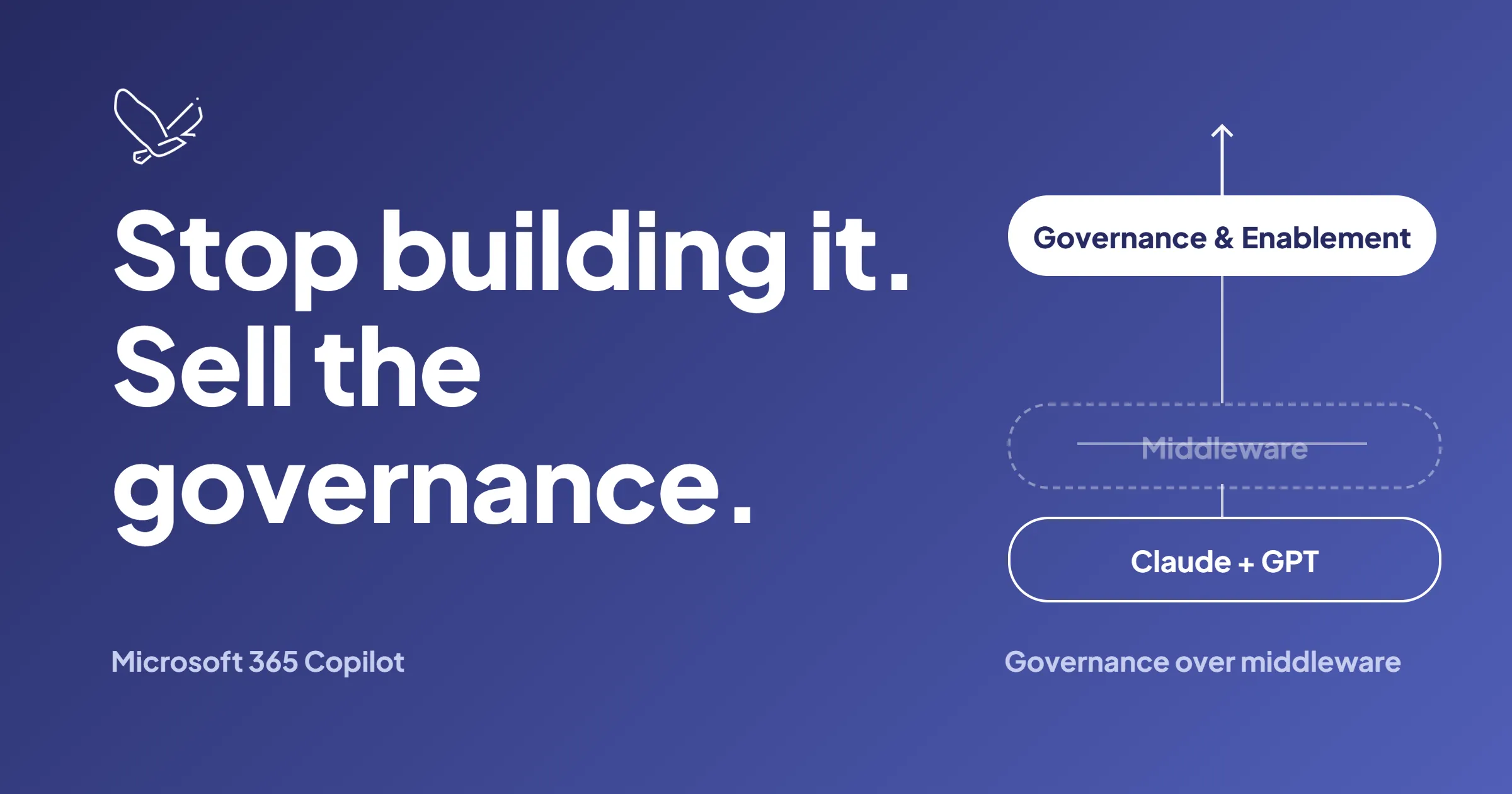
- So your real strategy work is governance and enablement, not integration. This post covers where a gateway still earns its place, and where it does not.
Most of your multi-model strategy is already built
Search “multi-model AI strategy” and you will find plenty of advice to build a serious engineering project: abstraction layers, gateways, routing logic, a roadmap measured in quarters. For an organization with real non-Microsoft needs, that can be exactly right. But if you are a Microsoft shop, a good part of that is already in the platform, so the honest strategy is often smaller than the roadmap suggests, and your job is to know which parts your client actually needs to build.
Here is the claim, stated plainly: if you are on Microsoft, your multi-model strategy is largely made for you. Microsoft aggregates two of the three frontier labs, Anthropic and OpenAI. Your real work is governance and enablement, not building plumbing. Let me show you why.
Multi-model is the default, not a clever hedge
Start with reality. Using more than one model is not an advanced move anymore, it is the normal state. In a16z’s survey of 100 enterprise CIOs, 37% were already using five or more models, up from 29% the year before. They got there because the lead keeps moving: in 2025 Anthropic reached 40% of enterprise LLM spend while OpenAI fell to 27%, down from 50% in 2023, with Google third at 21%. And it has not settled since: OpenAI just shipped GPT-6 Astra, and the top of the leaderboard moved again. In a market that reshuffles that fast, committing to one lab is the risky choice, not the safe one. So yes, you want access to more than one. Everyone does.
Microsoft is the aggregator
Here is the part the big-roadmap version misses: you do not have to assemble multi-model access yourself. Microsoft already did.
Your users get it inside Copilot, where model choice puts Claude and GPT in the apps they already work in. Your developers get it in Microsoft Foundry, which offers Claude and GPT frontier models on one platform. Two of the three frontier labs, on tap, with no build. Two things to flag to a client, though. First, Foundry is consumption-billed, so unlike Copilot’s included model choice, building on it runs up real usage costs, budget for it rather than treating it as free. Second, Google’s Gemini is not in Foundry, and Google holds about 21% of enterprise LLM spend, so if a client specifically needs Gemini, that is a real reason to look at a gateway. For everyone else, you are standing on the aggregator already.
So what is actually left to strategize
If the plumbing is done, what is your strategy? Two things, and neither is middleware.
Governance: deciding which models are enabled, for whom, and under what rules. That is a real decision with security and compliance weight, and it is the part clients actually need help with.
Enablement: teaching people to use the choice. Which model for which task, how to switch, how to test on their own work instead of trusting a leaderboard. That is where the value gets realized or wasted.
That is the part that is genuine work. Notice that none of it is integration.
“Don’t I still need a gateway or abstraction layer for a real multi-model strategy?”
For most Microsoft shops, no. The abstraction is the platform. You would add a gateway for specific reasons: heavy non-Microsoft vendors, a specialized model Foundry does not carry, or a hard portability requirement. Those are real cases, and they are the exception. Adding middleware you do not need is how a simple strategy turns into a maintenance project you will resent in a year.
What this means for you
If you are a consultant (SI, MSP, advisory): reposition the “multi-model strategy” engagement. It is not an integration build, it is a governance-and-enablement program layered on top of what Microsoft already gives the client. That is faster to sell, faster to deliver, and it is the honest version. Being the consultant who says “you already have most of this, here is the part that is real” builds more trust than selling a project the client does not need.
If you are a product company (ISV, SaaS): build on Foundry’s model catalog so you are flexible by default, and make “we are not welded to one lab” part of your pitch. Your buyers are already asking the question, and answering it well is a differentiator while it lasts.
The play: market the multi-model map
This is a marketing play. The one-page map is the offer. The play is how you get in front of the accounts who need it.
- Listen for the phrase. Flag every account where “we need a multi-model AI strategy” is being said, in your pipeline and your existing book.
- Reach out with the shortcut, not a scope document: “You probably already own most of a multi-model strategy through Microsoft. Want a one-page read on what you have and the one part that is actually missing?” That is a far easier yes than a six-month project.
- Lead with the angles that disarm the big-build pitch: multi-model is already the norm, Microsoft is the aggregator, and the real work is governance, not middleware.
- Point it at the proposed item: a paid multi-model map, one page, what they have via Microsoft versus any real gap, delivered fast.
That is the kind of positioning I bring to Microsoft partners, turning an intimidating-sounding strategy request into a quick, honest engagement you can win. If “we need a multi-model strategy” is floating around one of your accounts, that is the campaign I help you run. Worth a conversation.
Sources: a16z, AI Enterprise 2025 (Jun 2025); Menlo Ventures, State of Generative AI in the Enterprise (Dec 2025); Claude models in Microsoft Foundry (Microsoft Learn); Foundry Models overview (Microsoft Learn); Microsoft Learn, Copilot in Microsoft 365 apps with Anthropic models.
What is a multi-model AI strategy?
It is the approach of using more than one AI model rather than committing to a single provider, so you can match the model to the task and are not exposed when the performance lead shifts. For most organizations it is now the default, not an advanced option.
Does Microsoft support multiple AI models?
Yes. Microsoft 365 Copilot offers model choice between Claude and GPT in the apps, and Microsoft Foundry offers both frontier families to developers on one platform. You get multi-model access without leaving the Microsoft stack.
What is Microsoft Foundry?
Microsoft Foundry (formerly Azure AI Foundry) is Microsoft's platform for building AI applications and agents, with a catalog of models from multiple providers, including Claude and GPT, on one platform. It is billed on consumption, unlike Copilot's included model choice.
Do I need an AI gateway if I am on Microsoft?
Usually not. The Microsoft platform provides the multi-model access most shops need. A gateway makes sense for specific cases (significant non-Microsoft vendors, specialized models, or strict portability requirements), not as a default.
Is Microsoft Copilot multi-model?
Yes. Copilot now lets users choose between Anthropic's Claude and OpenAI's GPT models, administered through the Microsoft 365 admin center using the AI Administrator role. It launched on OpenAI models but is no longer tied to a single lab.
How do I govern which AI models my company uses?
Through the Microsoft 365 admin center for Copilot (enabling providers and scoping access to users or groups) and the Power Platform and Foundry controls for custom builds. Governance and enablement, not integration, are the real work of a Microsoft multi-model strategy.